Expression studies · The actor’s craft
NINE WAYS
TO FEEL.
Notes from my
acting practice.
I’ve put nine photographs here alongside a few things I’d try in rehearsal. Looking back at a still, I often find myself wondering what happened just before it, or what I was about to do next.
Rasa, bhava & how I approach the work ↓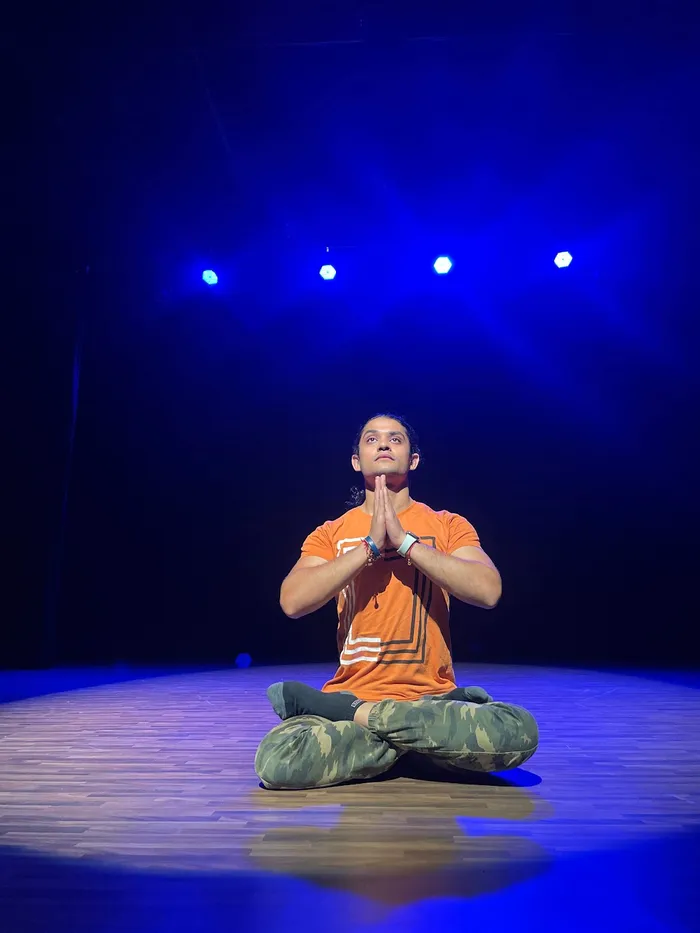
These are my readings of the photographs through the nine rasas. Open a picture to see the whole frame.
01 / 09 शृंगार
Śṛṅgāra
Love & attraction
Ask them to stay.
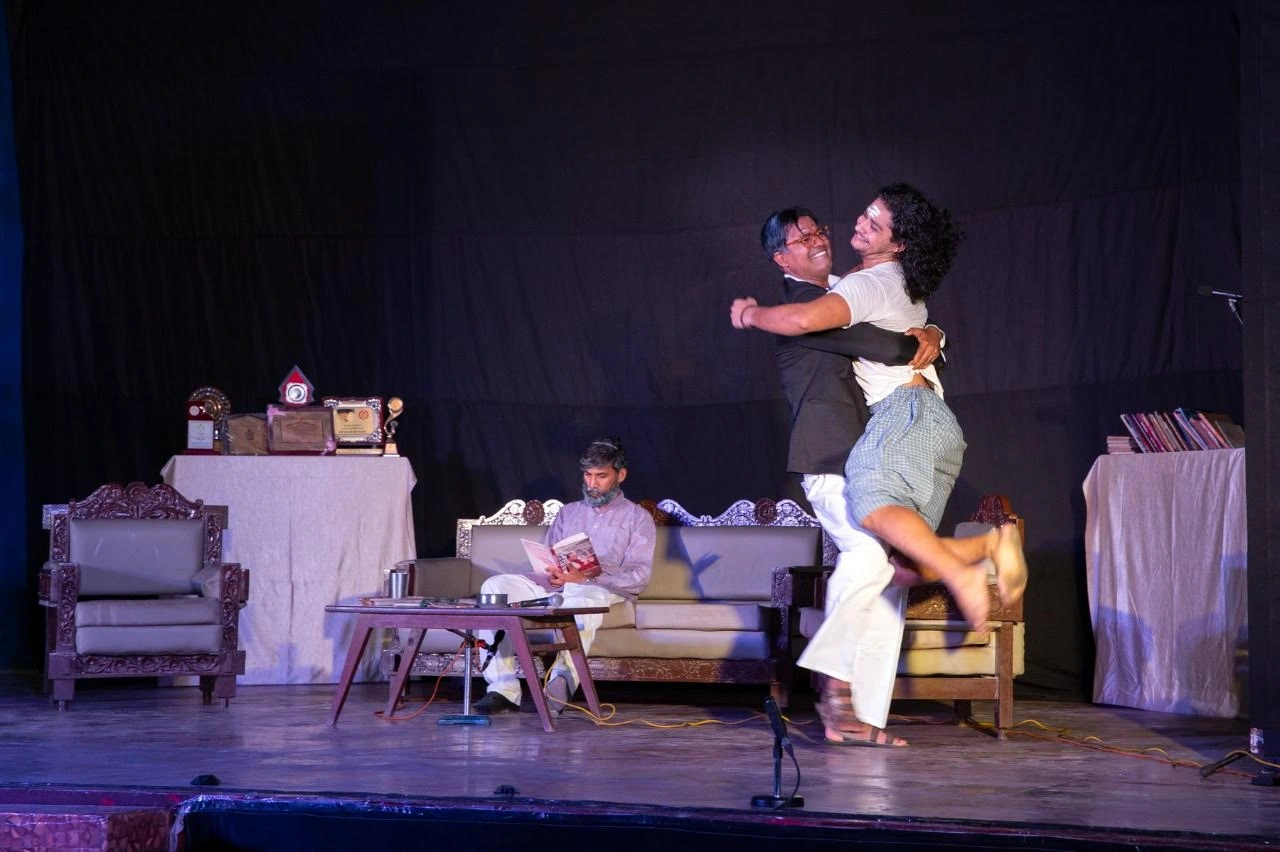
My feet are off the floor and I’m holding on to the other performer. There’s a lot of affection in that ridiculous, happy embrace. I wanted the whole moment here, including the person catching me.
For a scene about love, I’d start with something ordinary: trying to keep someone talking when they’re about to leave. What do I say? Do I reach for them? What happens if they stay?
What lets me put my weight in someone else’s hands?
02 / 09 हास्य
Hāsya
Mirth & laughter
Try to finish the sentence.
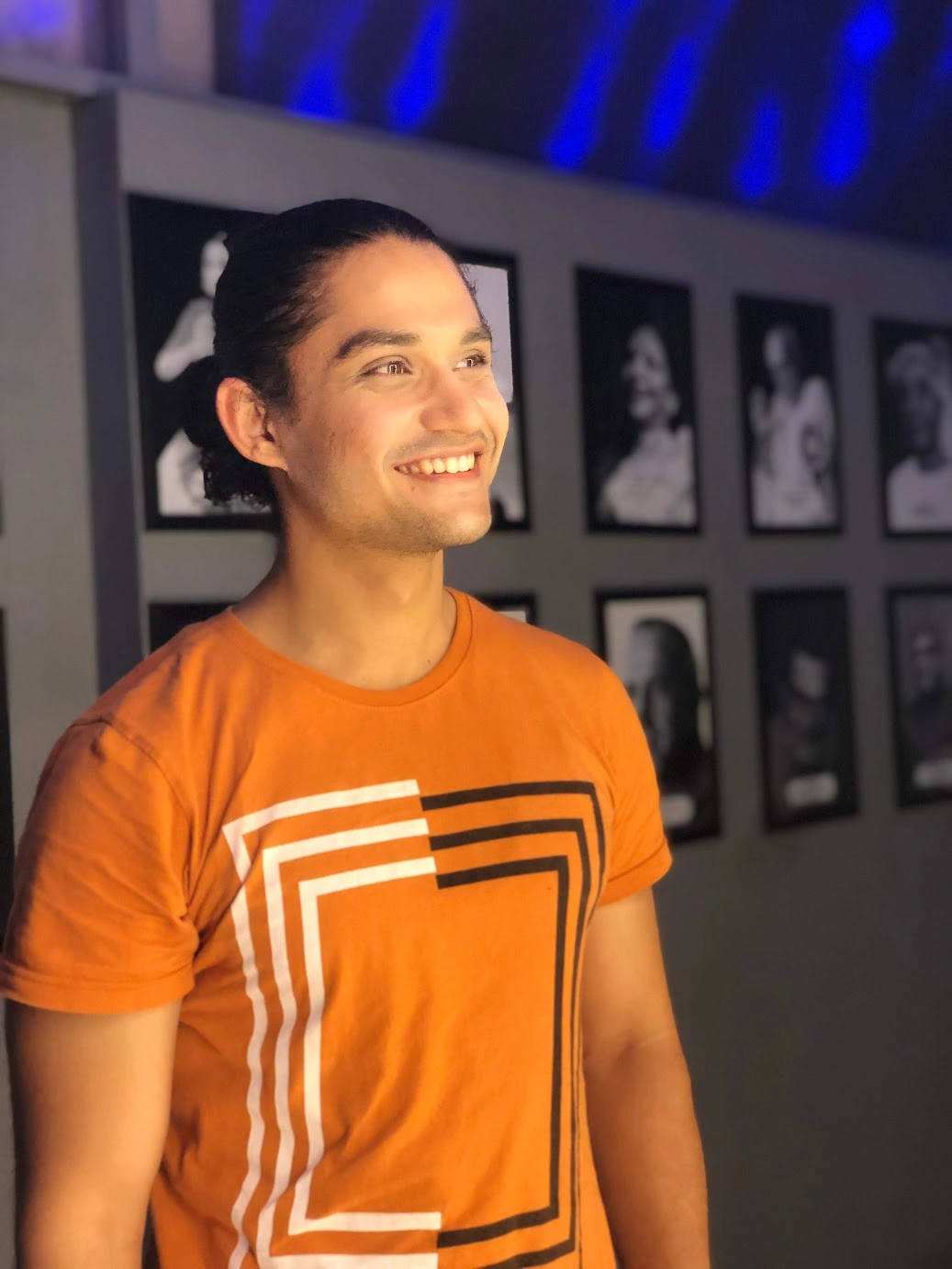
I’m smiling at someone beyond the camera. I like the fact that you can’t see what set it off. There’s already another person in the moment, even though they aren’t in the photograph.
A useful starting point for me is trying to finish a sentence while something keeps making me laugh. I have a reason to speak, someone to speak to, and something getting in the way.
What has just happened that I want someone else to find funny too?
03 / 09 करुण
Karuṇa
Compassion & pathos
What can I do for him?
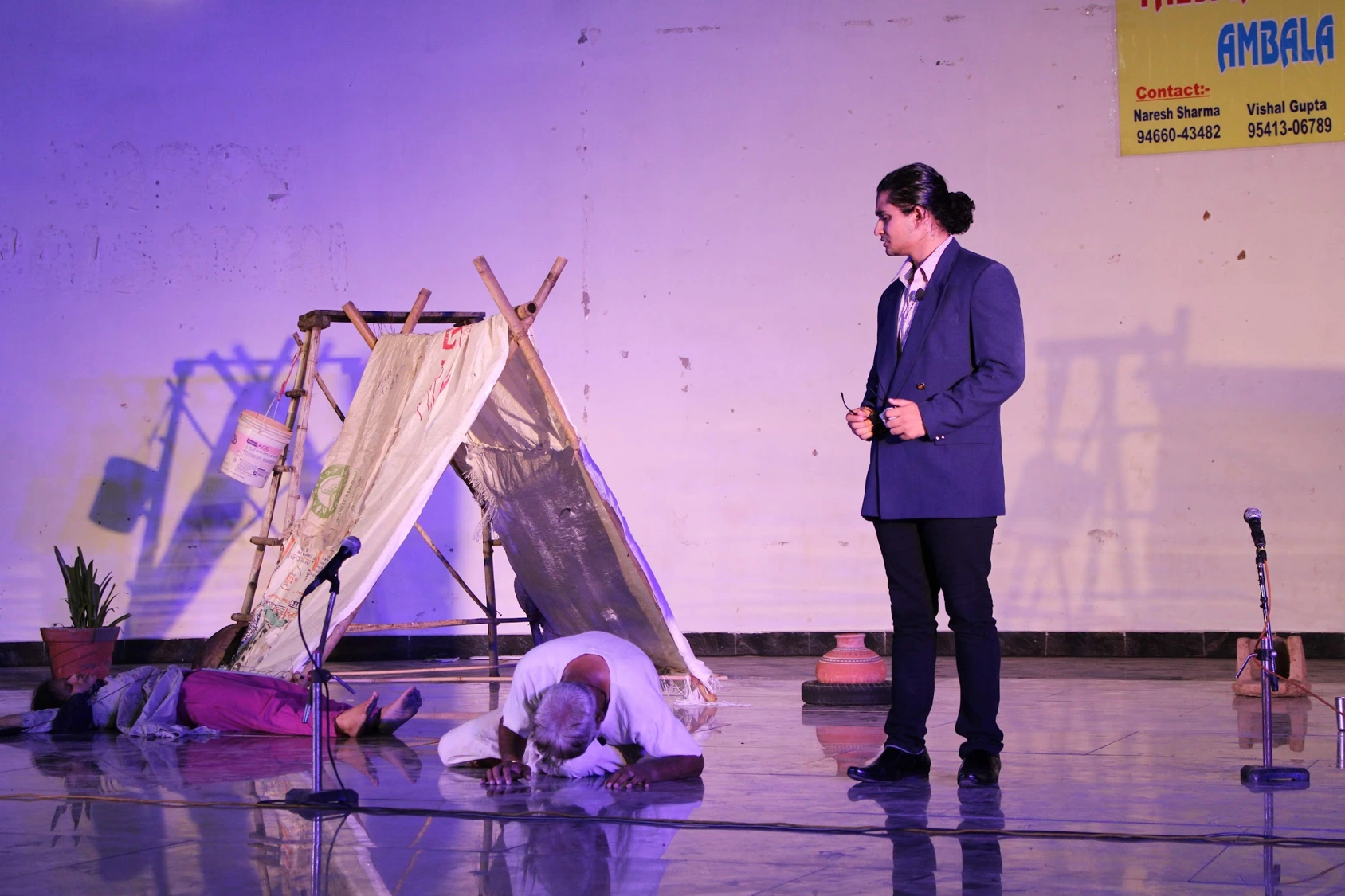
I’m standing beside a man who has folded to the floor. His distress is what draws me to this photograph. My part of the scene is in how I look at him, and what I do next.
I’d try this moment twice: once moving towards him, once staying where I am. Even that small choice changes the scene. Am I able to help? Do I know what to say?
What stops me from going closer?
04 / 09 रौद्र
Raudra
Anger & fury
Make them listen.
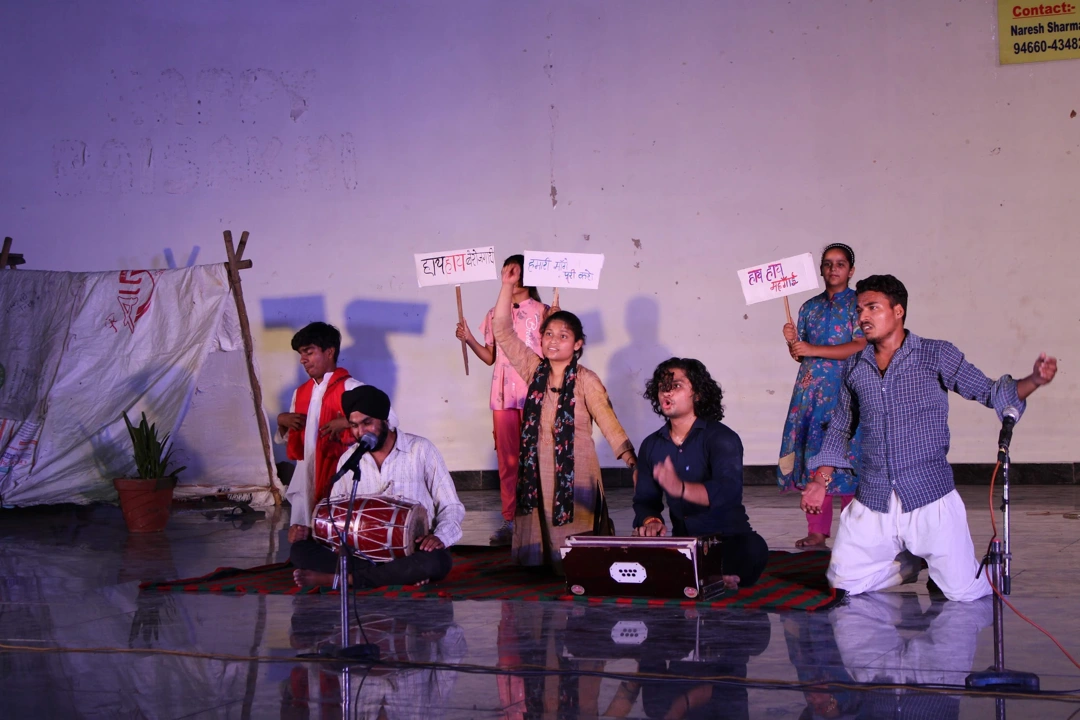
This photograph puts anger in a group: raised hands, placards, voices directed outwards. I wanted to keep the ensemble in view. The argument is happening between people, and the whole stage is involved.
I’d begin with one demand and someone refusing it. Then try again, more quietly. If I know what I need from the other person, I have something to play beyond raising my voice.
What do I need them to understand?
05 / 09 वीर
Vīra
Courage & resolve
Stay where you are.
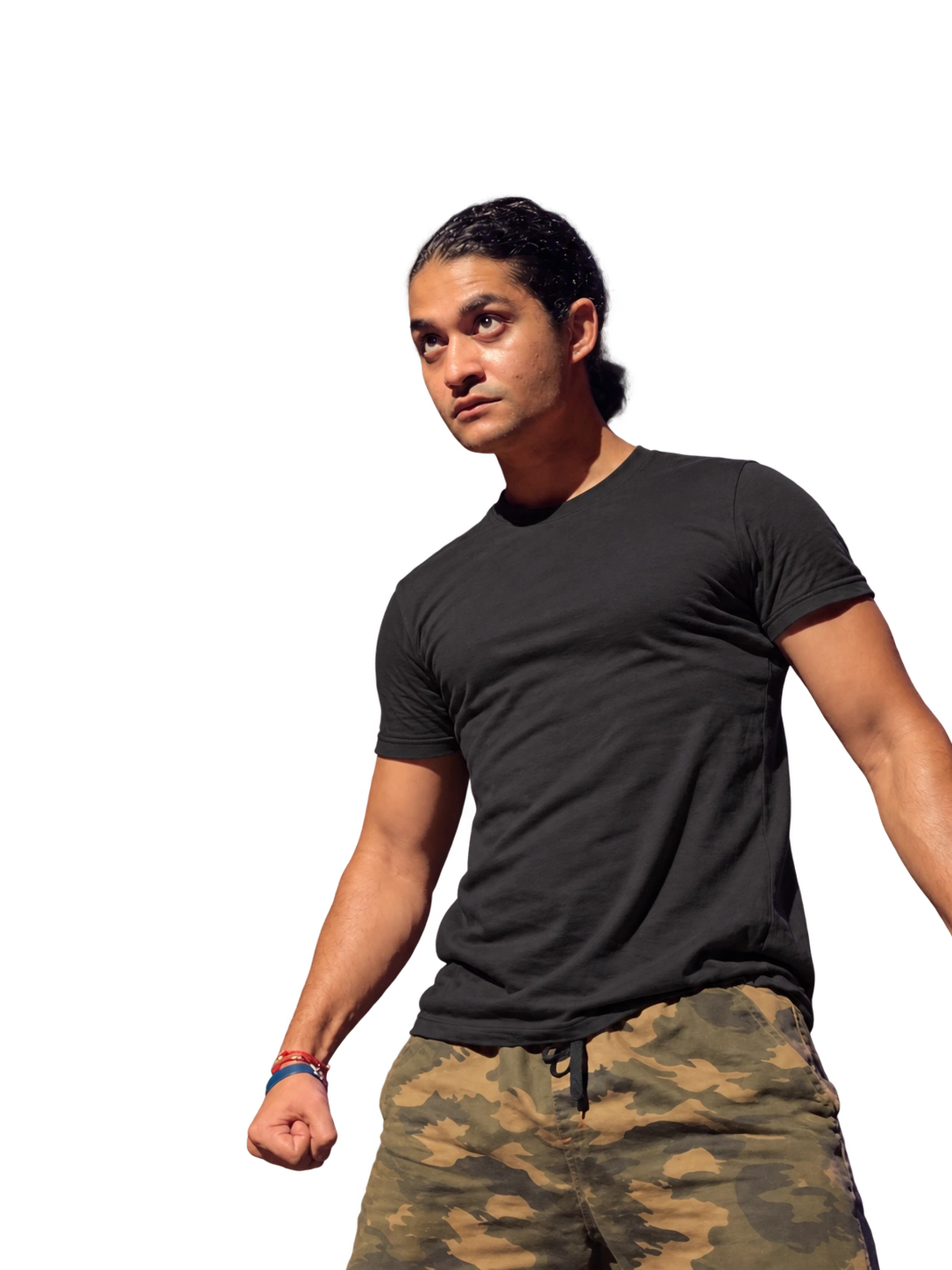
My fist is closed and I’m looking up. For this study, I’m interested in the decision to stay put. I can hold that shape easily enough; the harder part is knowing why I won’t move.
I’d give myself a reason to leave and someone I need to stay for. Then try the scene without the fist. Does the choice still come through in my feet, my voice, or the way I look at them?
What would make me stay when leaving is still possible?
06 / 09 भयानक
Bhayānaka
Fear & terror
Listen before you move.
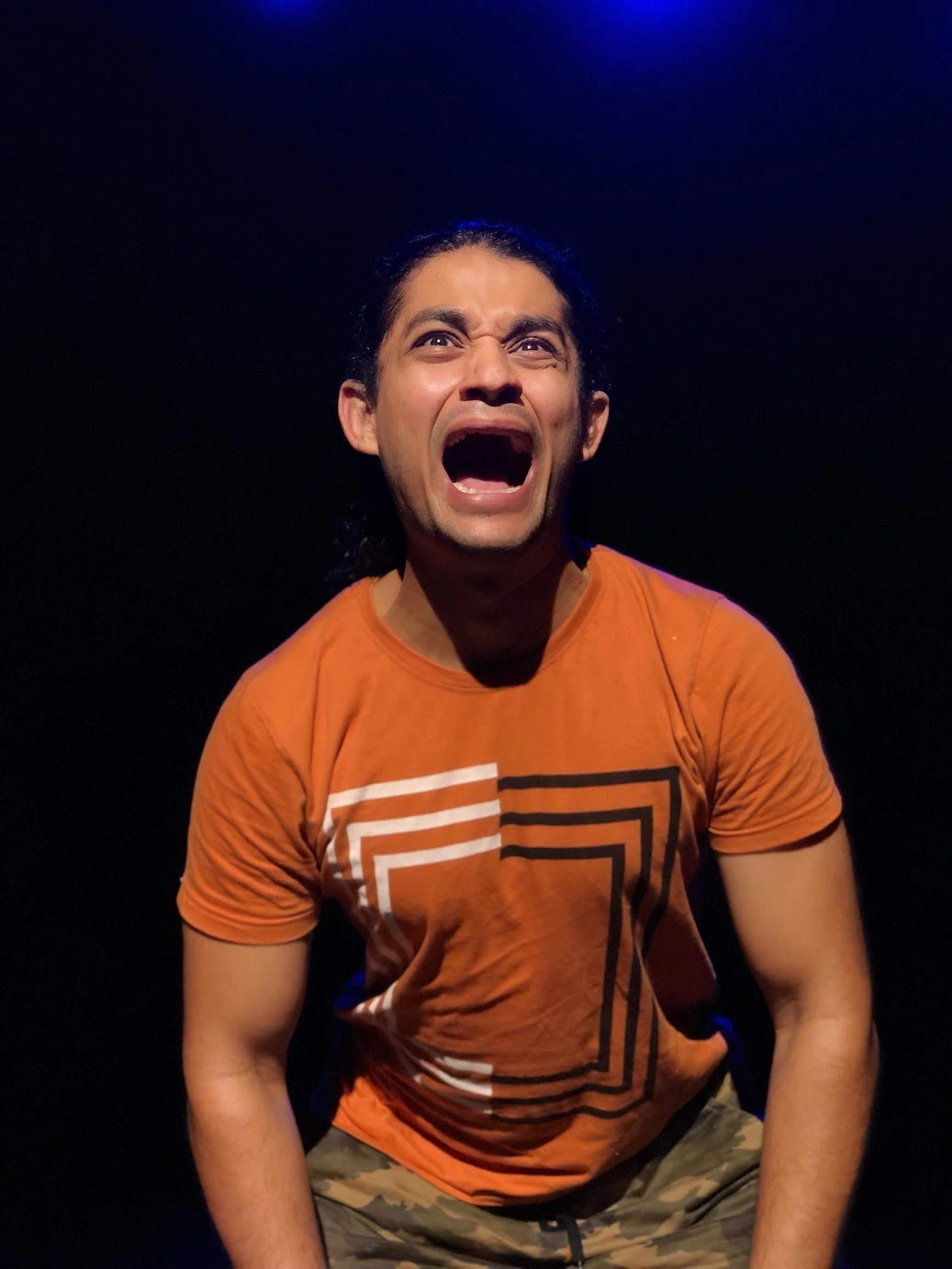
I’m leaning forward with my mouth open and my eyes wide. It’s a large reaction. Looking at it now, I want to know what happened a second earlier, before the body caught up.
I’d start with footsteps outside a door. Hear them stop. Wait for another sound. Look towards someone else in the room. That gives me a few things to discover before I reach the reaction in this photograph.
What has just changed in the room, and who do I need to warn?
07 / 09 बीभत्स
Bībhatsa
Disgust & aversion
Do I have to touch it?
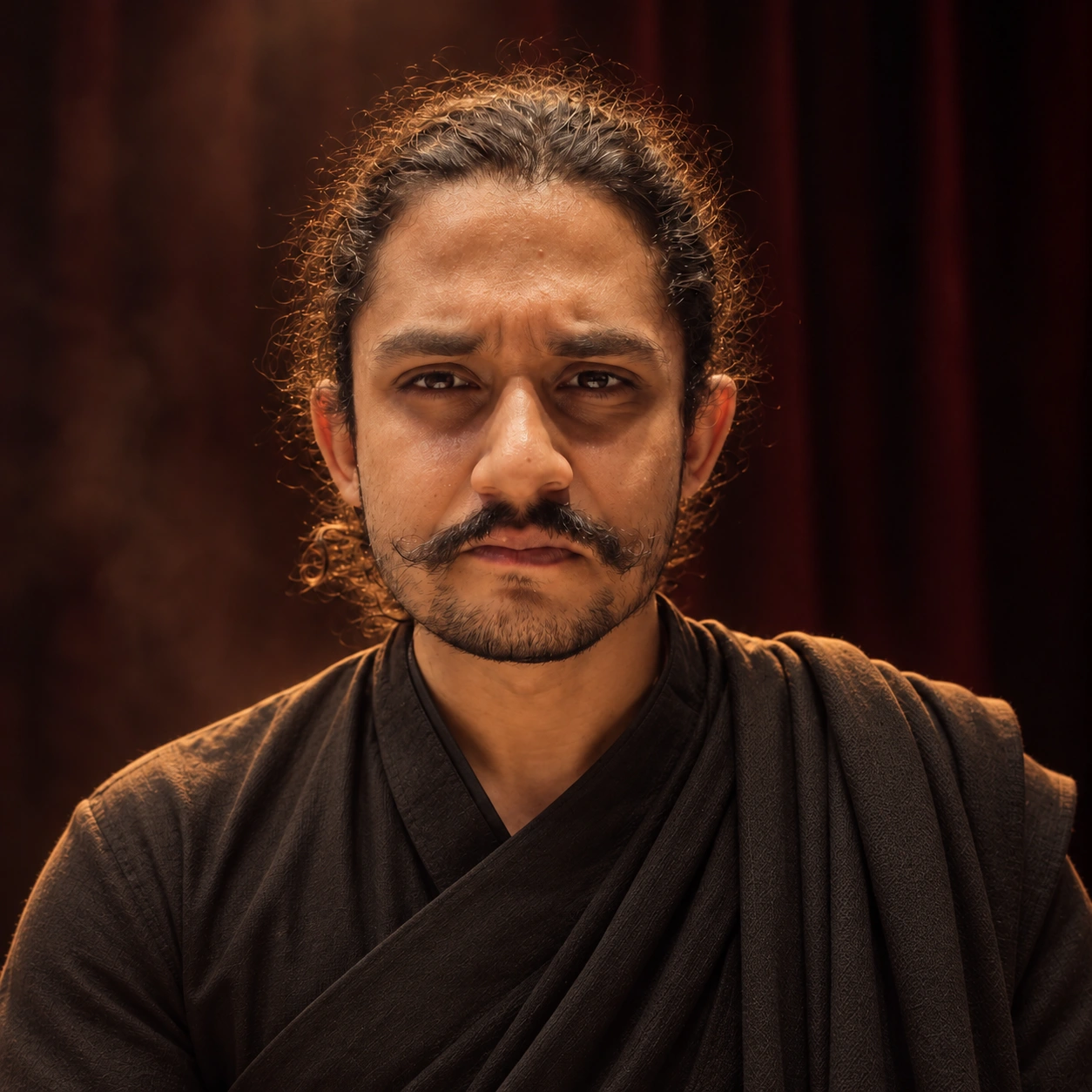
My brows are drawn together and the corners of my mouth turn down. It’s a small, held expression. For this chapter, I’m reading it as finding something hard to stomach.
I’d put an unpleasant object in the way of something I need to do. I still have to pick it up. That gives the hand a job, even while the rest of me wants to pull away.
What do I have to approach that every part of me wants to avoid?
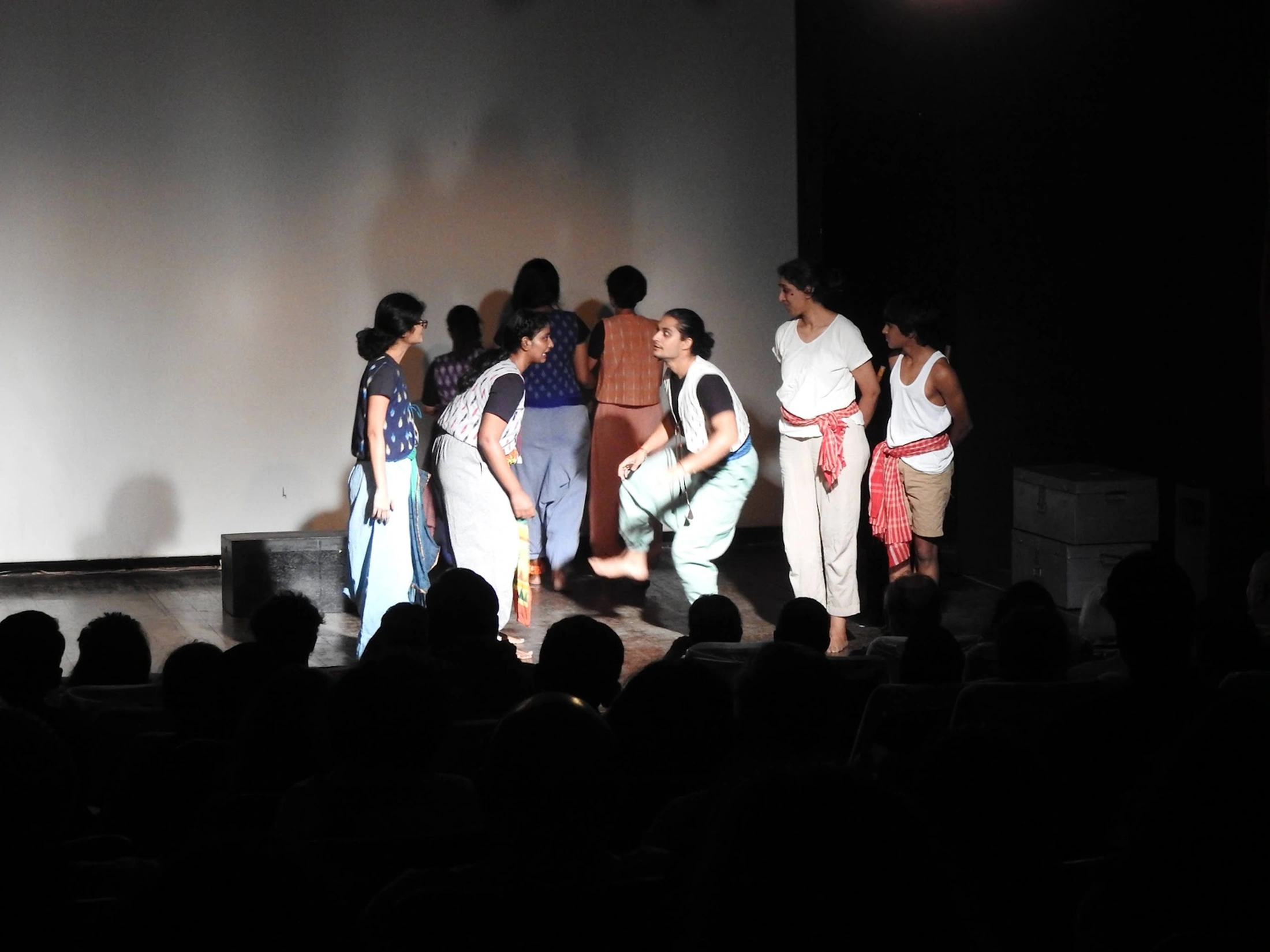
08 / 09 अद्भुत
Adbhuta
Wonder & amazement
Look again.
I’m halfway through a movement, with one knee up and my attention on the person opposite me. That’s what I like about this frame. Something has caught my attention before I’ve finished what I was doing.
For wonder, I’d rather look closely at something than start with a surprised face. A piece of glass catching the light is enough. Find one detail, then another, and let that change what I do.
What have I seen that I cannot quite take in yet?
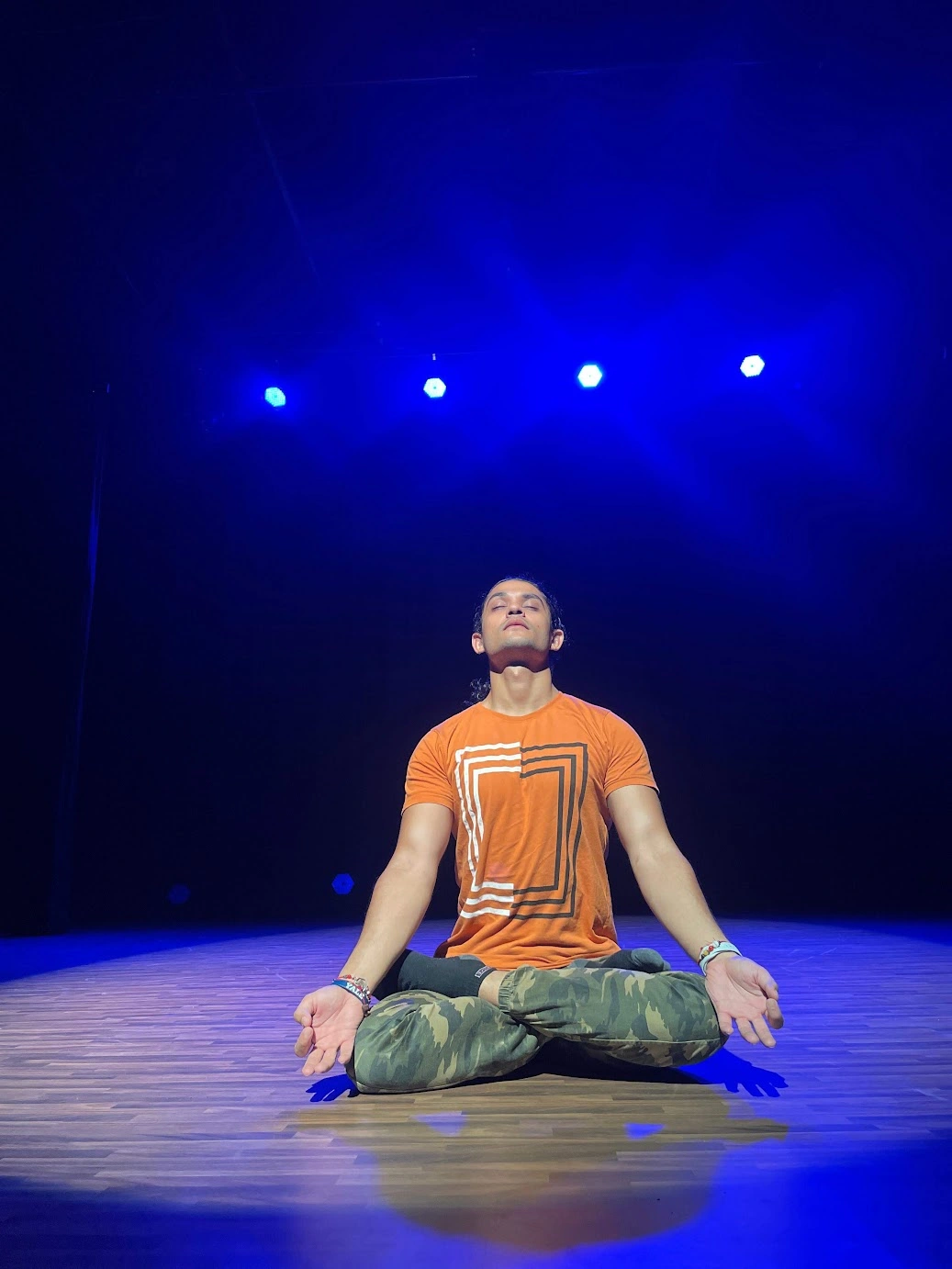
09 / 09 शान्त
Śānta
Peace & tranquillity
Sit. Listen. Come back.
Śānta is the one I find hardest. I struggle with ADHD. I can sit like this, eyes closed and palms open, while my mind is still going everywhere. The photograph catches the stillness; it can’t tell you how much effort that takes.
Prasanna writes about giving stillness a purpose, such as waiting or watching. That helps me find a way into it. I can listen for a voice or notice the weight of my hands. When my attention wanders, I have something to come back to.
What am I staying with, and what helps me return when my attention moves?
Rasa / Bhava / Action
Beyond
the expression.
What I do.
What the audience experiences.
Love, mirth, compassion, anger, courage, fear, disgust, wonder and tranquillity: the nine rasas name experiences a performance can offer its audience. A photograph can suggest one of them. In a scene, I also have to work out what I’m doing and who I’m doing it with.
What reaches you
In Indian Method in Acting, Prasanna separates the imagined character from the actor and audience. The character has a life within the story; we can be moved by it without literally living that life. Rasa is part of that encounter. It is what a performance lets us receive and savour.
His account of bhava makes me look beyond a passing expression. He describes sthāyi bhāva as a character’s core disposition, and sañcāri bhāva as the responses that arise as the story brings that character into contact or conflict with others. He also questions how inherited classifications fit contemporary characters. The same person can hesitate, flare up and soften. I want to understand what holds those changes together.
Give the body a reason
Prasanna gives action a sequence and asks what meets it. A reach has a destination; a pull needs something to pull against. Gesture involves the whole body. That gives me useful questions for these images: where does my weight go, what interrupts the movement, and whose response am I waiting for?
In the Vīra photograph, for example, I can see the closed fist. In rehearsal I’d want to try the scene with an open hand too. If the decision to stay disappears with the fist, I still have work to do.
Let quiet have a purpose
In his chapter on keeping still, Prasanna suggests an intention such as waiting or watching. An actor can be fully occupied without adding gestures to prove it. That is a useful distinction for my Śānta study. My experience of ADHD makes tranquillity difficult; I find a more workable question in what I am listening for, looking at, or returning to.
Keep the scene larger than the label
Prasanna warns against using the nine-rasa classification as an easy acting formula. That matters here: a scene can move between several feelings. The rehearsal ideas beside these photographs are my own responses to the reading; they are not exercises taken from his book.
Reading alongside the photographs
Prasanna, Indian Method in Acting, National School of Drama. References below use the printed page numbers in the fourth-edition scan, whose publisher’s note is dated January 2020.
- To Construct Action, pp. 31–37: sequence and preparation.
- To React, pp. 38–42, and Aangika, or Gesture, pp. 43–51: resistance and the whole body.
- Natyashastra, pp. 184–189 and 195–196: rasa, bhava and the limits of classification.
- Keeping Still, pp. 212–217: intention, attention and meeting an audience.